Post-Closing Surprises: 89% of Homebuyers in Nationwide Survey Experience Problems with their Home in First Year

The excitement of buying a home is huge: months if not years of searching are finally coming to a close. A new opportunity awaits– but as most homeowners can tell you, homes can be full of surprises, even after the most thorough inspection. We wanted to know what the most common post-closing “surprises” were– and how much they were costing homeowners.

Methodology
February 2026, American Home Shield surveyed 1,004 homeowners ages 20-78 nationwide on all the quirks, issues, and problems they encountered during their first year of homeownership — and whether they think the previous owners did a good job maintaining their homes.
Most Common Problems Homeowners Encounter in Year One
There’s no getting around it: chances are, as a new homeowner, you will encounter an unexpected issue in your first year of homeownership. Most homeowners surveyed (89%) experienced at least one issue in their first year, and some, more than one.
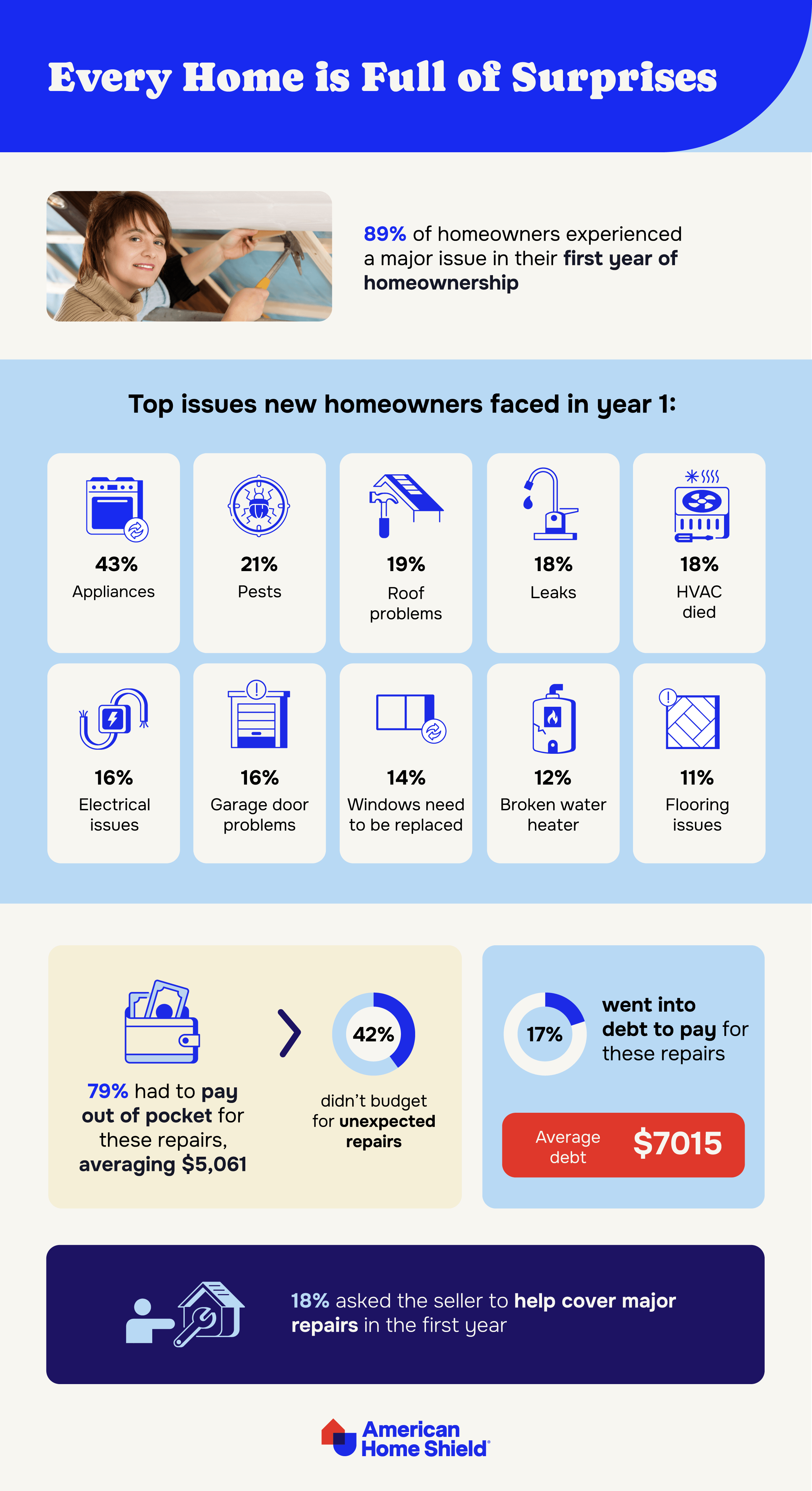
Among respondents, by far the most common problem of new homeownership is needing to replace appliances, which 43% marked as an issue encountered in their first year. Pests (21%), roof problems (19%), leaks (18%) affected about 1 in 5 homeowners as well. Eighteen percent had the unfortunate pleasure of their HVAC system dying, which can mean serious discomfort and a high price tag for repair/replacement, especially in the summer. Other top issues include garage door problems, electrical issues, replacing windows, broken water heaters, and flooring problems.
42% of Surveyed Homeowners Did Not Budget for First Year Repairs
Four in 5 new homeowners, freshly off paying a large sum to close on their house, had to pay out of pocket for the above issues, according to survey results.
- Out of pocket expenses averaged $5,061
- 42% didn’t budget for repairs
- Over 1 in 6 incurred an average debt of over $7,000
Nearly 1 in 5 tried to cut their losses by asking the seller to cover repairs in their first year. Typically, this means asking for either a lower selling price to defray costs or making allowances for repairs as part of the sale.
Among new homeowners surveyed that bought homes in cities, some were especially unlucky: 7% encountered an issue costing over $10,000 in their first month of homeownership!
Nearly 1 in 3 Don’t Believe Previous Homeowners Took Good Care of Their Property
While some home-related problems are pure bad luck, some others might be the result of poor maintenance on the part of the prior homeowners. Except in the most obvious cases, many homes appear fine– until you discover something during inspection. Twenty-nine percent of the new homeowners we surveyed don’t believe their sellers took good care of their homes.
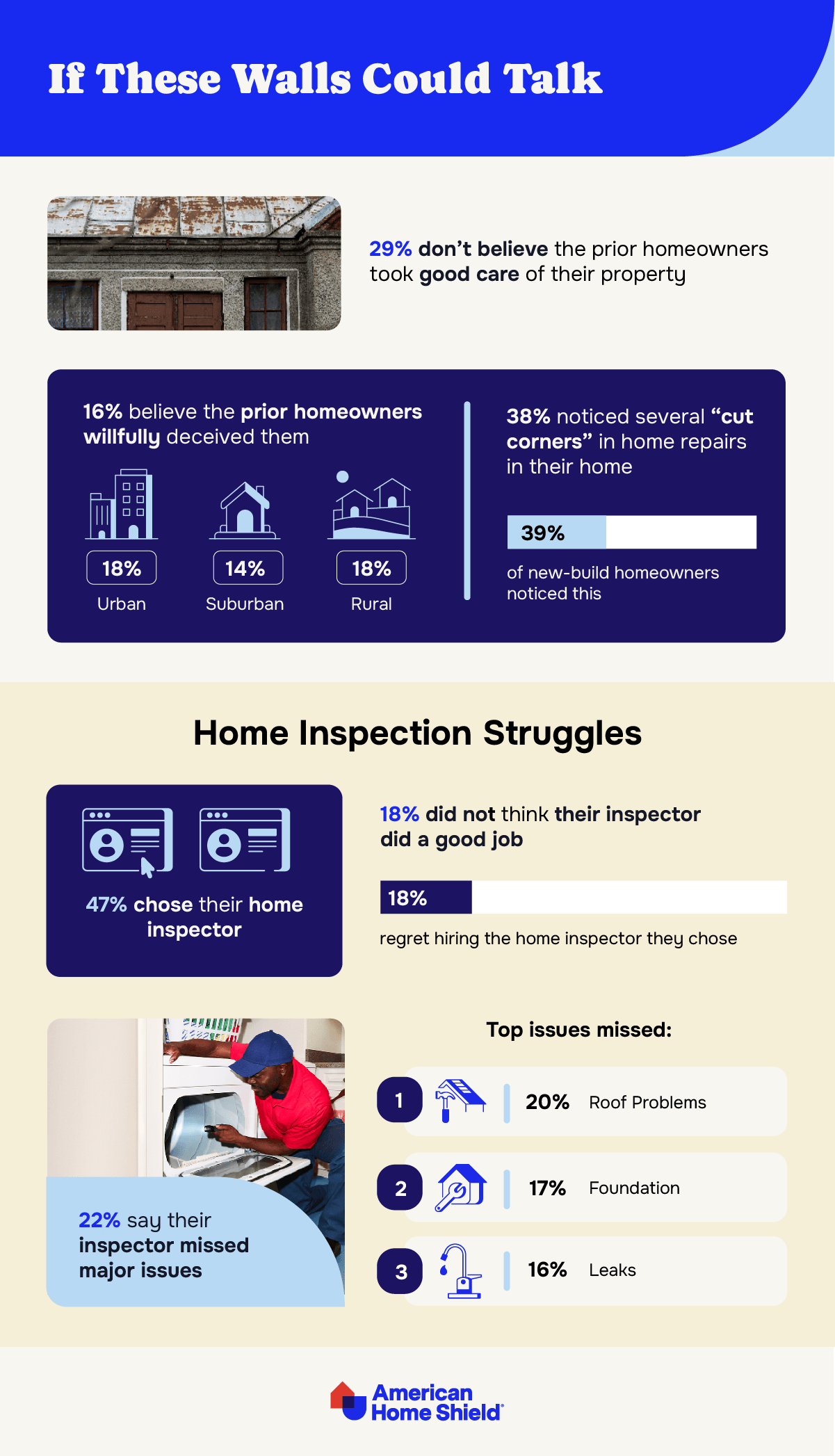
Even 1 in 6 (16%) respondents would go so far as to say that the prior homeowners willfully deceived them. When analyzed by location– urban, rural, and suburban areas– the numbers tell an interesting story: 18% of urban homeowners surveyed say the prior homeowners willfully deceived them about some aspect of their home, compared to 18% of rural and 14% of suburban homeowners.
Another common issue is finding “shortcuts” in prior repairs. Nearly 2 in 5 (38%) respondents found this in their homes, including 39% of those who purchased a newly built home!
Many soon-to-be homeowners depend on house inspectors to find any issues in their homes before closing to ensure they’re not on the hook for major repairs. Overall, just about half (47%) of surveyed homeowners chose their home inspector. No one is perfect at their job, but some inspectors are better than others: nearly 1 in 5 surveyed didn’t think their home inspector did a good job, and 18% regret hiring them.
Over 1 in 5 (22%) said their inspector missed major issues. The most-missed issues for the homeowners we surveyed include roof problems (20%), foundation issues (17%), and leaks (16%).
Looking for a home inspector? Increase your chances of finding a quality home inspector by consulting your real estate agent, asking friends and/or family, and do your due diligence and read reviews of any inspector before engaging their services.
The Hidden Costs of Homeownership
The housing market has been challenging for buyers; some would-be homeowners were willing to make sacrifices to get those keys in hand. Over 1 in 10 (13%) survey respondents waived appliance replacements or general repairs to buy their home, while 12% took the route of waiving their inspection to purchase. Additionally, 15% paid above the asking price for their homes.
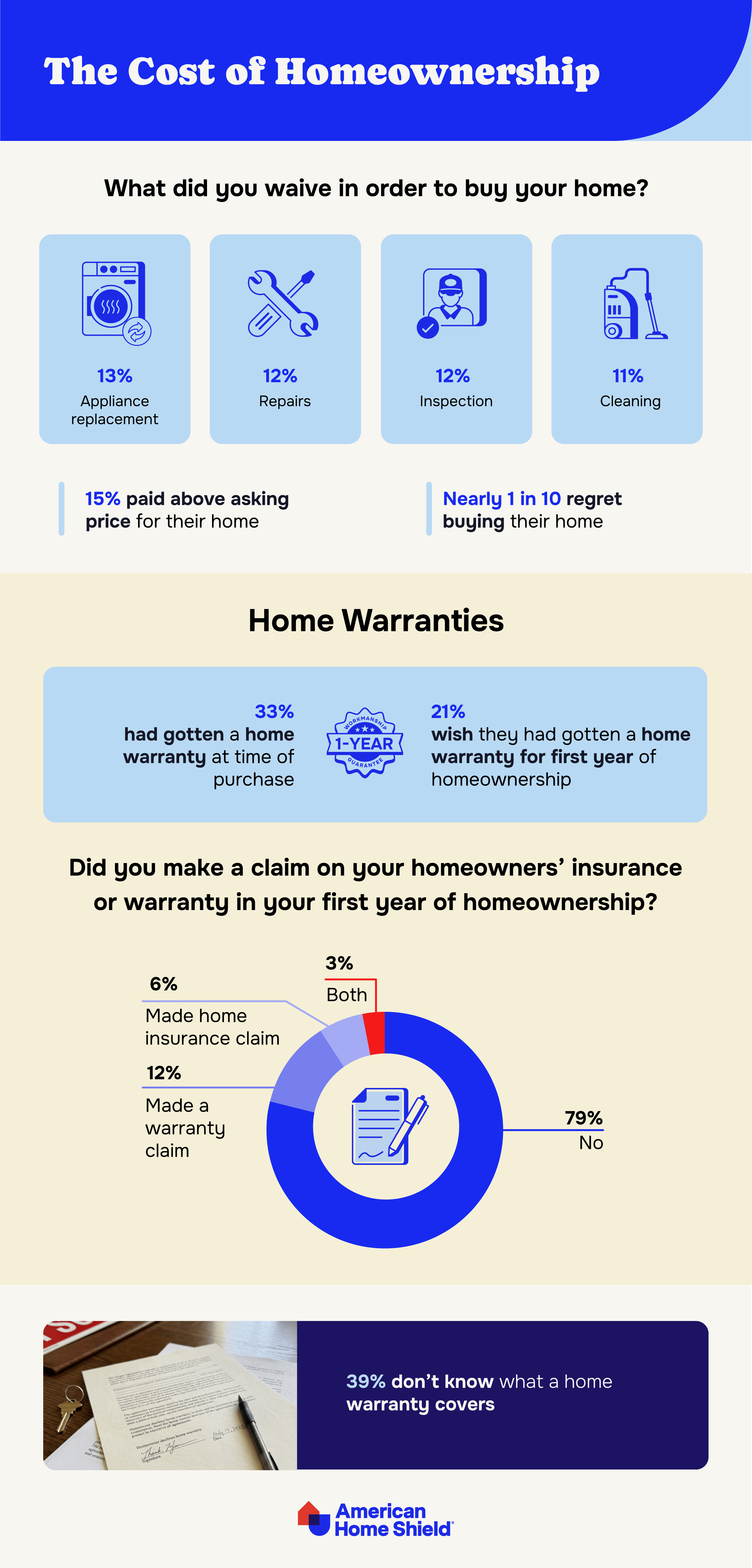
While most buyers are happy with their new homes, it doesn’t always work out: nearly 1 in 10 homeowners surveyed said they regret their purchase.
One way to mitigate the potentially steep costs of home repairs is through a home warranty. A home warranty doesn’t function as an emergency repair service, but it can help minimize the cost of repair or replacement of major home systems and appliances like your HVAC, plumbing, electrical, refrigerator, washer and dryer, and more.
About 1 in 3 homeowners surveyed had gotten a home warranty at the time they purchased their home; 21%, meanwhile, wish they had done so for their first year of home ownership.
Over 1 in 10 respondents made a claim on their home warranty in their first year of ownership, while just 6% made claims on their homeowners' insurance. Sadly, 39% of the homeowners we surveyed don’t know what a home warranty covers.
Home Warranties
A home warranty is a yearly protection plan for your home’s systems and appliances. Like most homeowners, you may find yourself asking, “what does a home warranty cover?” Your home warranty can cover the things in your home that you and your family rely on most, like the refrigerator, dishwasher, heating and AC systems, water heater, and other home systems and appliances.
Home Warranties vs. Homeowners Insurance
For reference, homeowners insurance protects the structure and contents of your home from specific types of damage; for example, most insurance will cover fire, vandalism, and theft. This insurance also provides liability protection for any injuries that might occur on your property. Many mortgage lenders require homeowners insurance. Instead, Instead, home warranties cover what will happen due to normal wear and tear, like that leaky faucet and that AC condenser. On average, AHS Members use their home warranty 25x more than their home owners insurance because home warranties cover the repair and replacement of those vital home systems and appliances.. The combination of the two will provide you the most protection, coverage, and peace of mind!
Homeownership will always have its ups and downs– as well as its fair share of surprises. The structures that house us and keep us safe age and need repair–just like we do. While major issues can be costly and daunting, it’s comforting to know that you’re not alone, and that every issue can and will be addressed.
Data Sources, Methodology, & Fair Use
The data in this report comes from a survey:
In February 2026 American Home Shield surveyed 1,004 homeowners across the nation about their current homes and issues they encountered in their first year of homeownership. 50% were men, 49% women, and the remaining 1% were either nonbinary or chose not to disclose. Ages ranged from 20-78 with an average age of 45.
Fair Use
When using this data and research, please attribute by linking to this study and citing AHS.com.
AHS assumes no responsibility, and specifically disclaims all liability, for your use of any and all information contained herein.